When and how?
When and how?
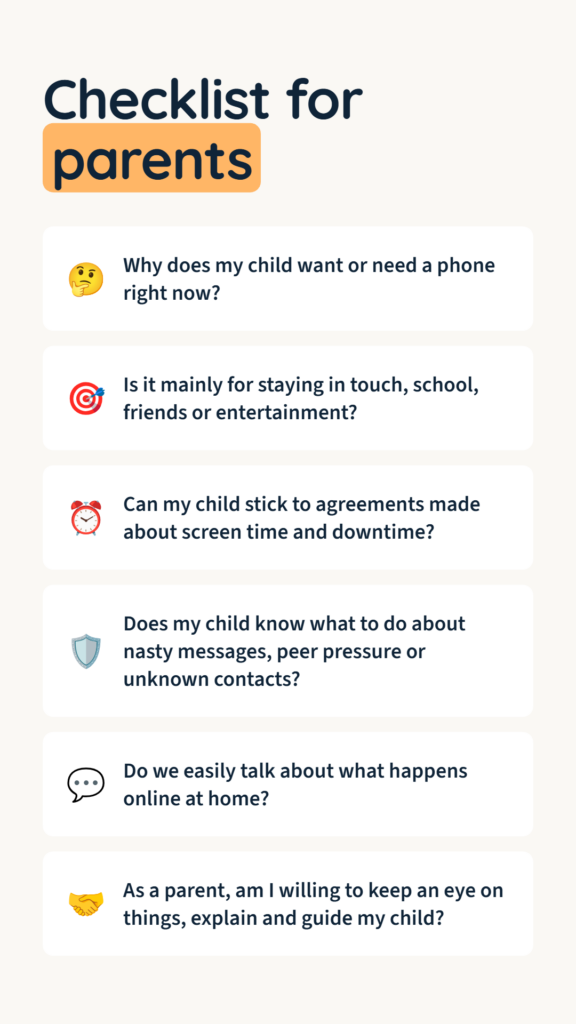
There is no magic age when every child is ready for a first smartphone. Moreover, there is no one type of first smartphone. The apps on a phone are what make it either smart or just a bit “dumber“. Above all, take a look at your child. Have they been good at sticking to agreements? Do they come to you when something unpleasant happens?
Start small: with being reachable, a few basic apps or clear settings. A first smartphone doesn’t have to be an all-or-nothing moment.
Which apps?
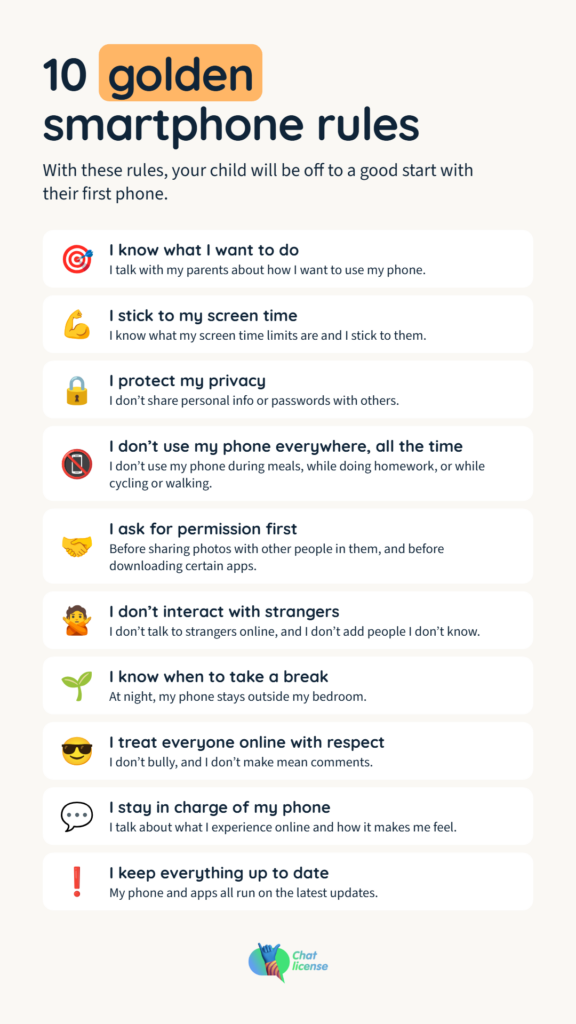
A first smartphone works best with agreements that you make together before your child takes it everywhere they go.
Because your child does not automatically learn how to deal with group chats, photo sharing, screen time, strangers or pressure to text back immediately. You have to practice this, just as you would driving or dealing with pocket money.
Make the rules concrete and negotiable. What is allowed? What not yet? And above all: when does your child come to you?
Download here!The best first phone is not necessarily the latest smartphone. The best choice is the device that fits what your child’s needs right now, and how smart you want it to be. For some children, being accessible is enough. Meanwhile, other children need apps for school, WhatsApp or navigation.
Is your child mainly about making or receiving calls? Then a simple phone can be enough. Your child can be reached, without immediate access to apps, games, social media or the internet.
Suitable for: Accessibility, short calls, few distractions.
Please note: Even simple devices differ from each other. Have a good look at what is and is not included.
Do you want to practice with a smartphone, but don’t want to open everything up yet? Then a startphone or smartphone with limitations fits well. You can start with calling, messaging, and a few practical apps.
Suitable for: Children who are already a bit more independent, but still need guidance.
Please note: Settings and agreements remain important. A limited device only works well if you have clearly established what the intentions are together.
A second-hand, refurbished or old device work just fine. With a refurbished phone, the device is checked and refurbished where necessary. Do check the battery condition and warranty.
Make sure the device is set up safely and still gets updates. Also look at privacy, app downloads, screen time, location, notifications and agreements about use.
Suitable for: Children who need apps for school, staying in touch, travel or social environments.
Please note: A smartphone comes with a lot of possibilities at once, so build it up slowly.
A smartwatch with call option can be useful if your child needs to be reachable, but you don’t want to give them a phone yet. Your child can call or send messages to fixed contacts, while the options remain more limited.
Suitable for: Young children, accessibility on the road, parents who don’t want to give a smartphone yet.
Please note: Take a good look at privacy, location settings, and who can contact them.
Prefer a new smartphone? You don’t need the latest and most expensive model right away. Look at what your child needs and how long the device will receive updates. Fairphone is worth considering if you’re for replaceable parts and long-term use.
Suitable for: Families looking for a new device that can last a long time.
Please note: Compare price and update period. A new device also calls for setting the right settings and agreements.
You might have written it off forever, but landline phones still exists! In this way, your child can independently call grandpa, grandma or a friend and get used to this form of contact.
Suitable for: Children who want to make calls independently at home, without owning a smartphone.
Please note: Not a solution for accessibility when out of the house.